Showing posts with label gut bugs. Show all posts

19 July 2015

Diet-induced Changes in the Gut Micro-biome

Diet-Induced Dysbiosis of the Intestinal Microbiota and the Effects on Immunity and Disease

Read full article HERE
Kirsty Brown  †, Daniella DeCoffe  †, Erin Molcan and Deanna L. Gibson  *
Department of Biology, University of British Columbia Okanagan, Kelowna, BC V1V 1V7, Canada;

Abstract

The gastrointestinal (GI) microbiota is the collection of microbes which reside in the GI tract and represents the largest source of non-self antigens in the human body. The GI tract functions as a major immunological organ as it must maintain tolerance to commensal and dietary antigens while remaining responsive to pathogenic stimuli. If this balance is disrupted, inappropriate inflammatory processes can result, leading to host cell damage and/or autoimmunity. Evidence suggests that the composition of the intestinal microbiota can influence susceptibility to chronic disease of the intestinal tract including ulcerative colitis, Crohn’s disease, celiac disease and irritable bowel syndrome, as well as more systemic diseases such as obesity, type 1 diabetes and type 2 diabetes. Interestingly, a considerable shift in diet has coincided with increased incidence of many of these inflammatory diseases. It was originally believed that the composition of the intestinal microbiota was relatively stable from early childhood; however, recent evidence suggests that diet can cause dysbiosis, an alteration in the composition of the microbiota, which could lead to aberrant immune responses. The role of the microbiota and the potential for diet-induced dysbiosis in inflammatory conditions of the GI tract and systemic diseases will be discussed.
Screen Shot 2015-07-17 at 9.41.13 PM

Microbial changes in the GI tract have profound effects on host inflammatory and metabolic responses. For example, protein-rich diets increase the activity of bacterial enzymes such as β-glucuronidase, azoreductase and nitroreductase, which produce toxic metabolites that trigger inflammatory responses. Because of the intricate balance that exists within the microbiota, alterations in one group or species may not only affect the host directly, but can also disrupt the entire microbial community. For example, members from the phyla Firmicutes, Actinobacteria, Verrucomicrobium and Bacteroidetes can degrade complex carbohydrates not absorbed by the host and can also inhibit the growth of opportunistic pathogens such as Clostridium spp. and members of Enterobacteriaceae like E. coli . Dysbiosis can also alter the metabolic activity of other members of the microbiota in the gut. Thus, it is conceivable that some diets promote the growth of microbes that could have detrimental effects on their host while other dietary factors could promote beneficial microbes. It is unknown whether diet-induced dysbiosis is a transient or long-term event. If dysbiosis is a long-term event, then postnatal nutrition could be used to promote changes in the microbiota early in life during the development of a more stable microbiota. In support of this, consumption of formula supplemented with fish oil has the capacity to alter the microbial composition in the infant; however, it is unknown if these microbial changes would be long lasting or transient. Although this study did not identify the specific microbes that changed, nor did it examine the effect on intestinal immunity, it does suggest that the microbiota could be modified through dietary factors to enrich beneficial microbes and prevent diseases associated with dysbiosis.

If you liked this post subscribe to my free newsletter today and get a free Paleolicious Snack Guide!

23 April 2015

Mind Altering Microbes: How your gut microbiome may influence your mood

"I've got a gut feeling about this"

While we have certainly heard that appetite and digestion are controlled by the enteric nervous system  (also known as "the master control panel in your gut"), who would've thought that the gut might also control your emotions and mood?  It's no wonder the old sayings, like "I've got a gut feeling about this", "That movie was gut-wrenching", or  "Come on, gut it out!" ring so true.  In fact I'd venture to say when we are trusting our intuition we associate it with having a "gut feeling" about something.
From the research it is now clear that gut microbes have an affect on inflammation, pain, eating behaviors, food cravings, mood and other seemingly unrelated symptoms, such as depression or uncontrolled anxiety.  In addition, it is common for depression and anxiety to co-exsist with disorders such as IBS (irritable bowel disorder).

It goes both ways...

Yes, it's true!  Did you know the gut-brain axis provides a way of communicating both directions using signals, such as neurotransmitters, hormones and cytokines?  This means that your gut bugs actually talk to your brain to influence emotions.  Equally important the emotions you feel and neurotransmitters produced by the brain have a profound effect on the gut as well.  We know that dysfunction in this communication between gut and brain can lead to various diseases, including depression and anxiety.  Who knew that the composition of your gut microbes could play such a great role in your mood?  The next time you get angry at your spouse or are overcome with sadness making you want to curl up in bed you can simply say, "Don't blame me...It's my gut microbes's fault!"  and you may be right on target!
The human gut is populated by more than 100 trillion microbes, which means there is more bugs in your gut than cells in your body.   And the genetic material contained by microbes in your gut is 150X that of the genetic material from human origin.  Most experts agree we have more than 1000 different species in our gut and over 7000 different strains.  We know that as we are exposed to stress, chemicals, antibiotics, and toxins, the diversity of the microbiome decreases and we know that the less diverse or microbiome, the more susceptible we are to illness and disease.
A baby's colonization of the gut first occurs at birth with vaginal exposure to the mother's microflora.  Did you know that c-section baby's have gut microbes more akin to skin flora than gut flora after birth?  And some studies show that throughout the entirety of life, they may never regain the normal diversity of vaginally delivered infants.

These are just a few of the functions of these bugs residing in your gut:

  • Development of your immune system function
  • Assisting with bowel movements and gut motility
  • Maintaining intestinal cell barrier integrity (keeping the the good stuff in and the bad stuff out)
  • Aiding in digestion and absorption of specific vitamins and minerals
  • Controlling fat absorption and distribution
Screen Shot 2015-03-14 at 6.50.47 PM
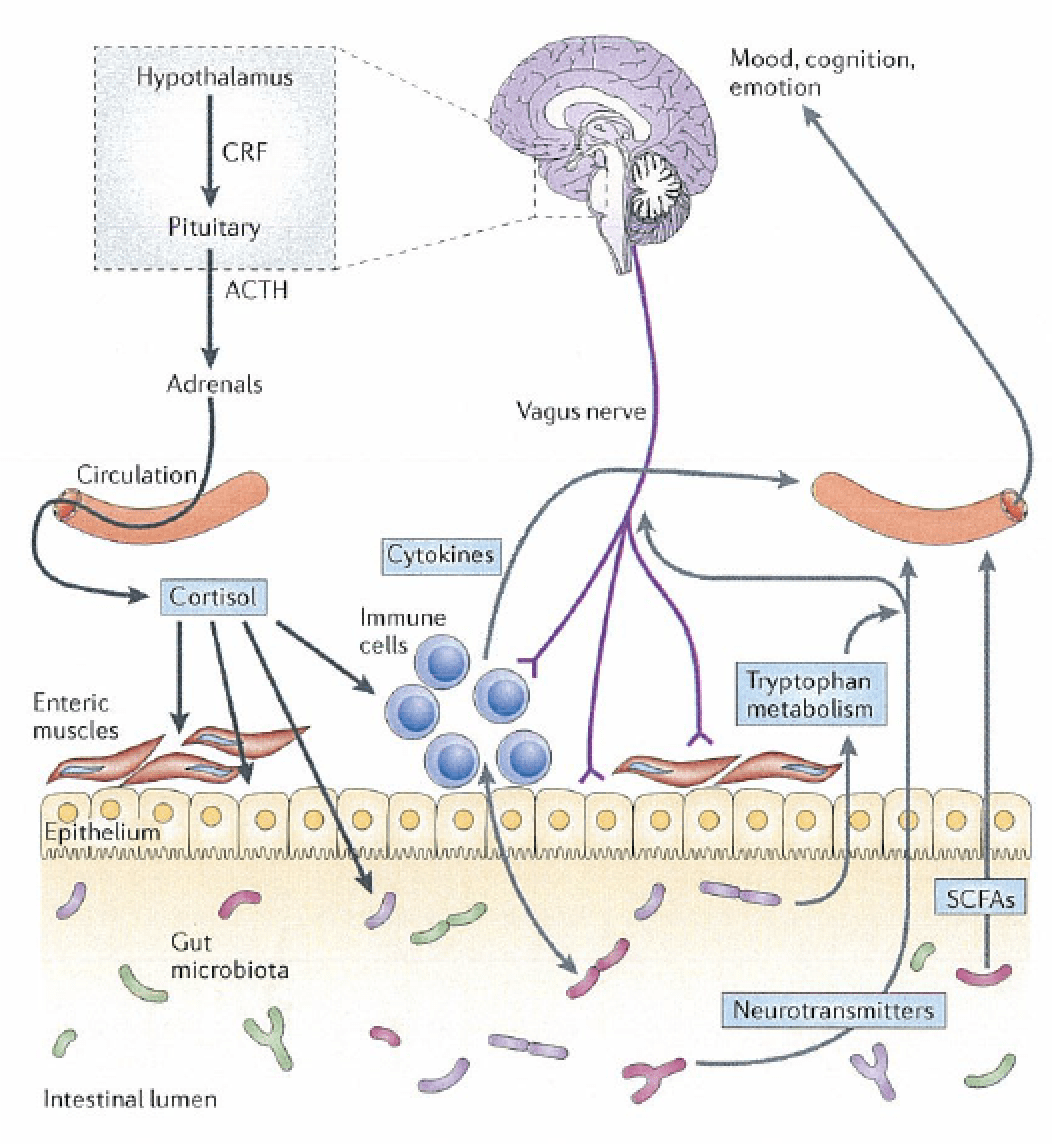
Pathways involved in communication between the gut microbes and brain.

Microbes and Stress

What is increasingly clear is that there is bi-directional communication between our gut microbes influencing the central nervous system and brain... and the reverse; communication between our brain influencing microbial composition.   Did you know that stress affects the gut microbes, too?

These are the top 3 ways that chronic stress affects the gut:

  1. Increases the levels of inflammatory cytokines (IL-6, TNF-alpha) which can changes gut microbe populations.
  2. Increases permeability of the gut lining, which is linked to many autoimmune diseases  (Hashimoto's thyroiditis, lupus, rheumatoid arthritis, multiple sclerosis and many others).
  3. Allows bacteria to cross over into the bloodstream where the bacterial coating (LPS) can trigger an intense inflammatory response in the body.

So how do the gut microbes contribute to anxiety and depression?

Here are some of the mechanisms by which the gut microbes influence the brain and emotions:
  • Altered microbial composition: Both probiotic ("good guys") administration and harmful infectious bacteria ("bad guys") have both shown to have an effect on the brain and emotions.  One study showed supplementation with probiotics decreased anxiety.
  • Immune Activation:  Bacteria in the gut have been shown to activate the immune system and increase production of harmful pro-inflammatory cytokines.   There are many studies showing a link between increase in certain cytokines and depression (see below if you want to read more)
  • Vagus nerve:  This is one of the main controls of the parasympathetic system that calms our fight or flight response and allows our body to relax and feel calm.  Activation of the vagus nerve and release of acetyl-choline has been shown to have a profoundly calming and anti-inflammatory effect on the body.  Most of the effects of gut microbes on the brain and body have been shown to be dependent on vagal nerve activation.
  • Tryptophan metabolism:  Tryptophan is an extremely important amino acid and the raw material needed to make serotonin (think "the happy neurotransmitter") by the body.  There is a pathway, called the kynurinine pathway that involves metabolism of tryptophan and accounts for nearly 95% of the stores of tryptophan in the body.  In the case of pathogenic microbial infections in the gut (bacteria, yeast, or parasites) this pathway may be activated and "steal" from your body's tryptophan stores.  This leads to depletion of serotonin stores and may result in insomnia and depression.
  • Microbial metabolites:  Bacteria in the gut help produce bile acids and short chain fatty acids (SCFAs) which are essential for human physical and mental health.
  • Neurometabolites: Crazy but true... bacteria have the ability to produce many neurotransmitters and metabolites that have direct action on brain and thought.   Did you know studies show microbes can even influence your food cravings?!
  • Bacterial cell wall sugars:  Perhaps most fascinating of all, the outer coatings of bacteria contain sugar molecules that can directly signal immune and hormonal systems into action.  This is the mechanism thought to be responsible for the healthy effects of probiotics on the gut and brain.
The bottom line is there is a growing body of evidence that suggests gut microbes play a large role in regulation in behavior and brain chemistry and are relevant to development of depression and anxiety.

So perhaps the best antidepressant is a healthy whole food diet and a high potency probiotic to fuel a healthy gut microbiome!

Check out Part II - Six Simple Steps to Treat Depression

If you liked this post subscribe to my free newsletter today and receive a complimentary copy of Dr. Jill's Paleolicious Snack Ideas!

Further Reading:

10 September 2013

Are Your Gut Microbes Making You Fat!?


Are Your Gut Microbes Making You Fat!?

There are trillions if bacteria living in your gut, that we know.  But did you know that the population of your microbes may determine if you are likely to be fat or thin?! As we study this amazing microbe machine inside of us, we are discovering the many and far reaching implications of having a healthy population of bugs in your gut.

Researchers recently found pairs of human twins in which one was obese and the other lean. They transferred gut bacteria from these twins into mice and watched what happened. The mice with bacteria from fat twins grew fat; those that got bacteria from lean twins stayed lean. The study published in Science on September 6, 2013, describes the details.

It is becoming more clear that our microbial colonies play critical roles in health, with doctors now curing people by transferring microbe-rich tissues from healthy people into sick ones. Where the term "fecal transplant" used to sound like science fiction, there is now strong enough evidence of potential benefits that there are major medical centers performing this procedure to treat resistant clostridium difficile colitis infections.  Could they be transplanting gut bugs in the future to cure obesity? Sounds crazy but perhaps not too far fetched...

I don't know about you... but I'd rather change my diet than exchange fecal matter! Keep reading on for how diet can change your microbes, too...

There is a caveat: Microbes associated with leanness can’t take up residence in mice with “obese” gut microbes unless the animals eat a healthy diet.

As part of the study, the twins’ gut microbes were transferred into mice that had been raised in a previously microbe-free environment. The researchers had a chance to observe what happens when a mouse carrying a collection of gut microbes from an obese twin is housed with another mouse carrying gut microbes from the lean twin.
“Eating a healthy diet encourages microbes associated with leanness to quickly become incorporated into the gut,” said senior author Jeffrey I. Gordon, MD, director of the Center for Genome Sciences & Systems Biology at Washington University. “But a diet high in saturated fat and low in fruits and vegetables thwarts the invasion of microbes associated with leanness. This is important as we look to develop next-generation probiotics as a treatment for obesity.”
In 2009, Gordon found that the microbes in obese individuals also lack diversity and contain more pathogenic species. Individuals with healthy microbes contain a larger variety and include species such as provatella and bifidobacter. Earlier research showed that obese individuals had a shift from more Bacteroidetes to greater proportion of Firmicutes. Those that remained lean continued to have high levels of bacteroidetes. There is also evidence showing that these gut bug populations also change as we age.  Perhaps the most important idea from that past decade of research is that the diet we consume has the ability to change our internal mileau!  More industrialized nations tend to have gut populations that favor Firmicutes while less industrialized societies that still rely heavily on unprocessed food sources have guts that remain high in Bacteroidetes.

These observations were confirmed by a recent Danish clinical study that linked the risk for metabolic disorders – obesity, cardiovascular disease, and diabetes – to a shortage of friendly intestinal.  The microbiome of bacteria-poor people were dominated by species that cause chronic inflammation in the body.

The "good" guys vs. the "bad" guys ... 

The Firmicutes ("bad" guys) and the Bacteroidetes ("good" guys)  are divisions of gut bacteria. The microbiota of the human gut is dominated by these two species, most of which are benign although a few are pathogenic.

The Firmicutes is the largest bacterial class, containing more than 250 types, including Lactobacillus, Mycoplasma, Bacillus and Clostridium.  They are a very diverse class and Clostridium species are obligate anaerobes whereas members of Bacillus form spores and many of them are obligate aerobes. Streptococcus pyogenes, the well-known cause of 'Strep throat', is also a member of the Firmicutes.

The Bacteroidetes include about 20 types. In the human gut, Bacteroidetes is probably the most abundant single genus. Species of Bacteroidetes are obligate anaerobes that are benign inhabitants of the gut. However, they are opportunistic pathogens that can cause disease if they gain access to the peritoneal cavity outside the gut, for example in bowel perforation or surgery. In addition research raises the question of how consumption of increasingly hygienic and processed food deprives our microbiota from useful environmental genes and possibly affects our health.


Could Probiotics Help?

Probiotics are bacteria that help maintain a healthful balance of microbes in the intestines, and generally benefit their host.  The average person’s digestive tract hosts about 400 kinds of probiotic bacteria, which help prevent the growth of harmful bacteria and promote healthy digestion.  Now we know they may also affect our disposition towards being thin or obese!

Lactobacillus are often given to patients following a course of antibiotics, and are also found in yogurt and most other cultured/fermented foods.  Probiotics may be used in infants to populate the gut after c-section and may benefit babies with colic.  For more on probiotics and how they can benefit your health, read this!  I believe we are just on the edge of understanding how these healthy bugs and supplementation of different strains may affect health and disease and weight.  Stay tuned for the coming research and blog articles...


So What Should I Eat?

The Paleo Diet may be beneficial in reducing your risk of chronic diseases such as diabetes, obesity, heart disease and many autoimmune and inflammatory conditions. I frequently use the basic principles of the paleo diet to help patients re-learn how to eat healthy, maintain ideal weight, and feel fabulous! Perhaps the most important thing about it is that it encourages you to get back to whole delicious real food.  It will allow you to feel better, lose weight easily and maintain muscle at any age. I challenge you to give it a try for yourself for 30 days and see if it doesn't change your life!