Showing posts with label depression. Show all posts

08 September 2016

How the Immune System can Control Your Behavior

If someone you love is experiencing depression or finding less pleasure in social activities, you might want to look deeper.   It is quite possible that hidden infection or inflammatory condition may be causing the changes you observe.  Have compassion...there is often more to it than meets the eye.  I have seen many relationships crumble when one person is suffering from immune dysfunction and social isolation and the other does not see the illness for what it really is.

Our immune system is a powerful force inside each one of us!  This protective system is charged with the job of responding to foreign invaders to keep us in optimal health.  Most of us don't think too much about this system until it is not working correctly.  I treat many patients that suffer from overactive or under-active immune systems due to chronic infections, like tick-borne diseases;  toxic exposures, like mold and mycotoxins; or autoimmune diseases, like multiple sclerosis, lupus or Hashimoto's thyroiditis.  Although many patients understand the important role of the immune system in protection and defense, few people know that it also controls our behavior.  A recent study in Nature discussed the role of cytokines activated when the immune system goes on red alert and the connection to social isolation and autistic behaviors.  It's even plausible that changes in immune function may lead to personality changes!

Sickness and Depression

Perhaps no connection has been more studied than that of immune activation and inflammation and the link to depression.  Systemic infections cause the patient to allocate limited resources, conserve energy and prevent spread of infection.  The resulting sickness behavior is common to most infections, including viruses, bacteria and multi-cellular parasitic infections.  There is a broad spectrum of symptoms – fever, nausea, decreased appetite, malaise, fatigue and achiness – all of which may aid in the fight to conserve resources and increase isolation-type behavior.  In animal models we see sickness associated with a decrease in time  seeking interaction with a other animals as a result of diminished motivation for social exploration.  Symptoms of depression appear after pro-inflammatory cytokines are produced by the body or if they are administered experimentally. The fact that inflammation often leads to later depression suggests a cause–effect relationship.  It indicates that immune activation can precipitate depression. Many symptoms of inflammation-induced depression overlap with sickness behaviors, including fatigue, changes in sleep pattern, lack of interest in daily or pleasurable activities (anhedonia), changes in appetite or body mass and unexplained aches and pains

Inflammatory Cytokines and the Brian

A recent article about inflammatory cytokines and brain signaling discussed inflammation and the brain:
When considering the pathological signaling cascades in immunological disorders of the brain, certain cytokines might be considered of key importance, with their presence determining the course of a particular disease. Interleukin-1 (IL-1), IL-6, IL-17, and TNFα are critical for the pathogenesis of inflammation in certain brain disorders. Targeting these cytokines or their receptors can alter the course of several neurological diseases, but the effects may be beneficial or harmful.
We understand from this article that the inflammatory signals of the immune system (cytokines) have a profound effect on the brain.  Many patients battling systemic inflammatory or autoimmune disorders suffer from an "inflamed brain" and all that goes with it... symptoms like depression, anxiety and insomnia.  The role of cytokines on behavior can be summarized by saying that TNFα (sickness and depression) and IL-1β (sickness) alter behavior by direct actions on neurons of the brain.

Gaba may affect the immune system too...

GABA, an inhibitory neurotransmitter in the brain, has a similar inhibitory effect on the immune system. Antigen presenting cells (APCs) of the immune system have gaba receptors and therefore, gaba can directly inhibit the function of these immune cells. What this means is the neurotransmitter from the brain may have a direct inhibitory effect on the body's immune system.  This article on Gaba and the immune system states....Intricate and reciprocal regulatory relationships exist between the nervous system and the immune system, mediated in part by chemical messengers.


Insults to the body, from the outside or from the inside, activate cells of the innate immune system. 
[PHOTO SOURCE HERE]

23 April 2015

Mind Altering Microbes: How your gut microbiome may influence your mood

"I've got a gut feeling about this"

While we have certainly heard that appetite and digestion are controlled by the enteric nervous system  (also known as "the master control panel in your gut"), who would've thought that the gut might also control your emotions and mood?  It's no wonder the old sayings, like "I've got a gut feeling about this", "That movie was gut-wrenching", or  "Come on, gut it out!" ring so true.  In fact I'd venture to say when we are trusting our intuition we associate it with having a "gut feeling" about something.
From the research it is now clear that gut microbes have an affect on inflammation, pain, eating behaviors, food cravings, mood and other seemingly unrelated symptoms, such as depression or uncontrolled anxiety.  In addition, it is common for depression and anxiety to co-exsist with disorders such as IBS (irritable bowel disorder).

It goes both ways...

Yes, it's true!  Did you know the gut-brain axis provides a way of communicating both directions using signals, such as neurotransmitters, hormones and cytokines?  This means that your gut bugs actually talk to your brain to influence emotions.  Equally important the emotions you feel and neurotransmitters produced by the brain have a profound effect on the gut as well.  We know that dysfunction in this communication between gut and brain can lead to various diseases, including depression and anxiety.  Who knew that the composition of your gut microbes could play such a great role in your mood?  The next time you get angry at your spouse or are overcome with sadness making you want to curl up in bed you can simply say, "Don't blame me...It's my gut microbes's fault!"  and you may be right on target!
The human gut is populated by more than 100 trillion microbes, which means there is more bugs in your gut than cells in your body.   And the genetic material contained by microbes in your gut is 150X that of the genetic material from human origin.  Most experts agree we have more than 1000 different species in our gut and over 7000 different strains.  We know that as we are exposed to stress, chemicals, antibiotics, and toxins, the diversity of the microbiome decreases and we know that the less diverse or microbiome, the more susceptible we are to illness and disease.
A baby's colonization of the gut first occurs at birth with vaginal exposure to the mother's microflora.  Did you know that c-section baby's have gut microbes more akin to skin flora than gut flora after birth?  And some studies show that throughout the entirety of life, they may never regain the normal diversity of vaginally delivered infants.

These are just a few of the functions of these bugs residing in your gut:

  • Development of your immune system function
  • Assisting with bowel movements and gut motility
  • Maintaining intestinal cell barrier integrity (keeping the the good stuff in and the bad stuff out)
  • Aiding in digestion and absorption of specific vitamins and minerals
  • Controlling fat absorption and distribution
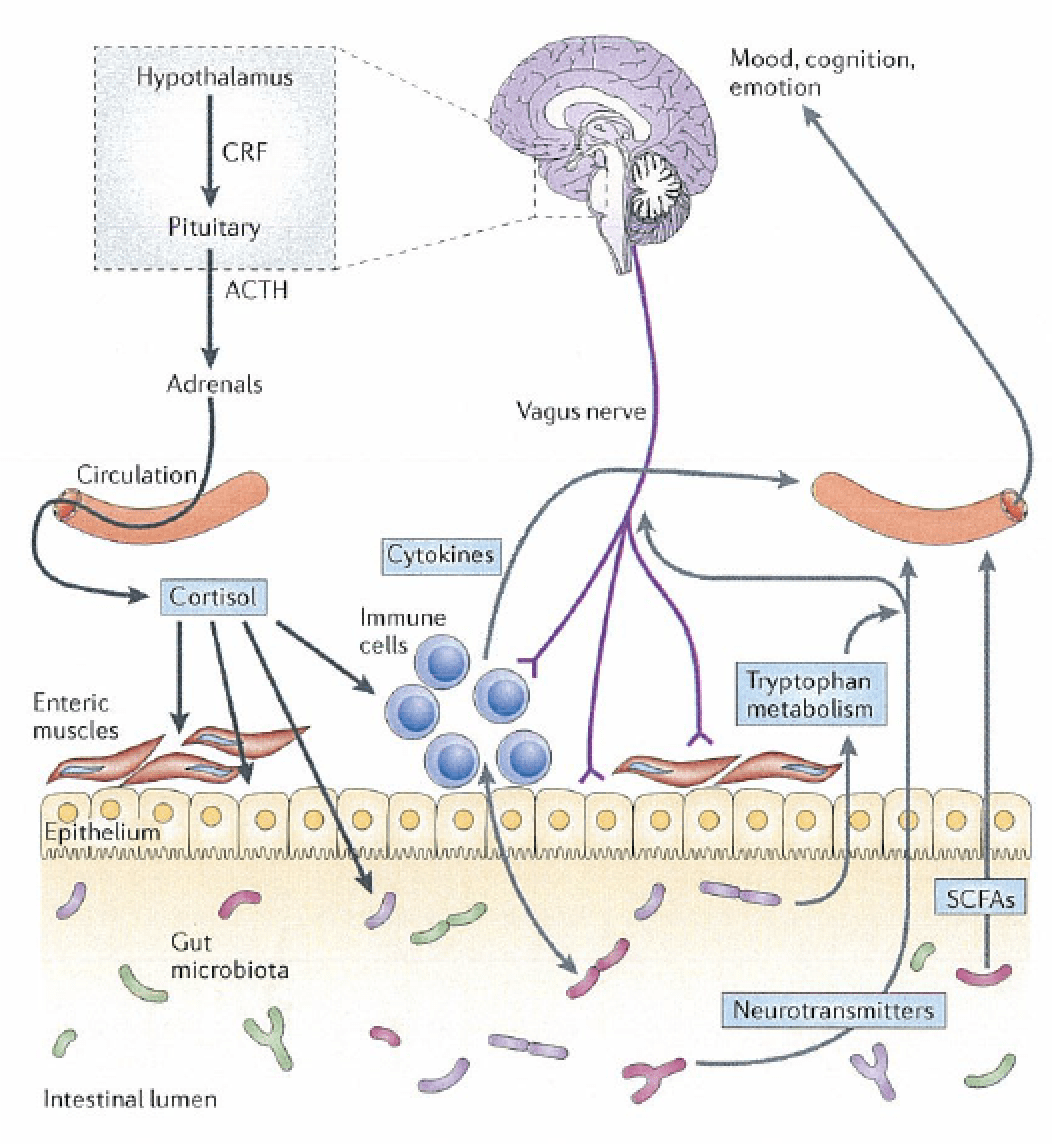
Screen Shot 2015-03-14 at 6.50.47 PM
Pathways involved in communication between the gut microbes and brain.

Microbes and Stress

What is increasingly clear is that there is bi-directional communication between our gut microbes influencing the central nervous system and brain... and the reverse; communication between our brain influencing microbial composition.   Did you know that stress affects the gut microbes, too?

These are the top 3 ways that chronic stress affects the gut:

  1. Increases the levels of inflammatory cytokines (IL-6, TNF-alpha) which can changes gut microbe populations.
  2. Increases permeability of the gut lining, which is linked to many autoimmune diseases  (Hashimoto's thyroiditis, lupus, rheumatoid arthritis, multiple sclerosis and many others).
  3. Allows bacteria to cross over into the bloodstream where the bacterial coating (LPS) can trigger an intense inflammatory response in the body.

So how do the gut microbes contribute to anxiety and depression?

Here are some of the mechanisms by which the gut microbes influence the brain and emotions:
  • Altered microbial composition: Both probiotic ("good guys") administration and harmful infectious bacteria ("bad guys") have both shown to have an effect on the brain and emotions.  One study showed supplementation with probiotics decreased anxiety.
  • Immune Activation:  Bacteria in the gut have been shown to activate the immune system and increase production of harmful pro-inflammatory cytokines.   There are many studies showing a link between increase in certain cytokines and depression (see below if you want to read more)
  • Vagus nerve:  This is one of the main controls of the parasympathetic system that calms our fight or flight response and allows our body to relax and feel calm.  Activation of the vagus nerve and release of acetyl-choline has been shown to have a profoundly calming and anti-inflammatory effect on the body.  Most of the effects of gut microbes on the brain and body have been shown to be dependent on vagal nerve activation.
  • Tryptophan metabolism:  Tryptophan is an extremely important amino acid and the raw material needed to make serotonin (think "the happy neurotransmitter") by the body.  There is a pathway, called the kynurinine pathway that involves metabolism of tryptophan and accounts for nearly 95% of the stores of tryptophan in the body.  In the case of pathogenic microbial infections in the gut (bacteria, yeast, or parasites) this pathway may be activated and "steal" from your body's tryptophan stores.  This leads to depletion of serotonin stores and may result in insomnia and depression.
  • Microbial metabolites:  Bacteria in the gut help produce bile acids and short chain fatty acids (SCFAs) which are essential for human physical and mental health.
  • Neurometabolites: Crazy but true... bacteria have the ability to produce many neurotransmitters and metabolites that have direct action on brain and thought.   Did you know studies show microbes can even influence your food cravings?!
  • Bacterial cell wall sugars:  Perhaps most fascinating of all, the outer coatings of bacteria contain sugar molecules that can directly signal immune and hormonal systems into action.  This is the mechanism thought to be responsible for the healthy effects of probiotics on the gut and brain.
The bottom line is there is a growing body of evidence that suggests gut microbes play a large role in regulation in behavior and brain chemistry and are relevant to development of depression and anxiety.

So perhaps the best antidepressant is a healthy whole food diet and a high potency probiotic to fuel a healthy gut microbiome!

Check out Part II - Six Simple Steps to Treat Depression

If you liked this post subscribe to my free newsletter today and receive a complimentary copy of Dr. Jill's Paleolicious Snack Ideas!

Further Reading:

31 August 2014

The Hidden Epidemic... Is Yeast Overgrowth Destroying Your Health?

Did you know your gut microbes could be dramatically affecting your health?

Hey guys! ...this is not just for women.  Men, too, commonly suffer from intestinal yeast overgrowth or fungal dysbiosis!

Every day we see new research on the effects of unhealthy gut organisms on the brain, the thyroid gland, the nervous system, the immune system, and the heart and vascular system.  In functional medicine, this is one reason we focus so intently on helping our patients heal their gut and thrive.  Without a healthy bacterial population in the colon, it’s nearly impossible to experience the optimal health we all desire.
Many people are unknowingly fighting a battle against a single-cell fungus in the gut.  Its name is Candida Albicans, although in recent years there has been an increase in non-albicans species of yeast.  Candida is a normal organism that is part of our skin flora, intestinal microbes, and for women, vaginal flora.  Men, this doesn't mean you can't harbor yeast as well!   This seemingly benign player can become hostile if the environment is right.  High intake of refined carbohydrates and sugar, frequent antibiotic or prednisone use, hormones and birth control pills and other medications give the yeast an advantage over the normal protective bugs, like lactobacillus, so that it flourishes.  It has the ability to take over and becomes invasive leading to a host of unwanted symptoms.  Sadly, many conventional physicians do not recognize that the gut can be a reservoir of these fungal organisms.   If you have ever experienced vaginal yeast infections, rectal irritation, white coating on your tongue called thrush, or any fungal skin or nail infections, like onychomycosis, you may also have a large number of these buggers living in your gastrointestinal tract.

I crave sweets and carbs all the time…

One of the most important things that I notice with patients who have fungal dysbiosis is the feeling of being tired and “run down” all the time with intense cravings for sugar or carbohydrates. Many patients don’t believe me when I tell them that if their gut is healthy, they will get to the point of having no food cravings at all!  It’s really true!  And if you are still experiencing intense, uncontrollable cravings, binge eating, or other issues in a love-hate relationship with sugar and refined carbohydrates, you can bet there is a problem with your gut microbes!

Take this quiz to find out if YOU have a problem!

These are common symptoms that may occur with yeast overgrowth in the gut.  Keep in mind, these are not specific to yeast alone, but if you experience them on a regular basis you are likely to have a real problem with fungal dysbiosis, or yeast overgrowth.
 Give yourself 1 point for every one of these symptoms you experience regularly:
  • Weight gain
  • Difficulty losing weight
  • Premenstrual symptoms
  • Fatigue
  • Muscle pain/fibromyalgia
  • Poor focus/concentration
  • Brain fog
  • Irritable
  • Depression
  • Anxiety
  • Headaches or migraines
  • Cravings for sugar or carbohydrates
  • Drowsy after meals
  • Constipation
  • Diarrhea
  • Gas and bloating
  • Rectal itching
  • Vaginal discomfort or burning
  • Low libido
  • Joint pain
  • Crying spells
  • Dizziness or light-headedness
  • Sinus pressure/congestion
  • Trouble sleeping
  • Halitosis (bad breath)
  • Body odor
  • Frequent sore throat
  • Coughing/wheezing/shortness of breath
Scoring
  • > 8 – You may have intestinal dysbiosis
  • > 14 – It is likely you have an issue with intestinal dysbiosis, which could include yeast overgrowth
  • > 20 – It is almost certain that you have fungal dysbiosis or yeast overgrowth

Fungal Dysbiosis and Leaky Gut Syndrome

If yeast becomes dominant in the gut, it may take over and overwhelm the good bacteria.  This is called Fungal Dysbiosis.  The situation becomes dire when yeast or abnormal gut microbes proliferate and dysbiosis occurs.  The problems start when yeast changes from a benign one cell organism to the more invasive hyphe form.  These forms can secrete enzymes, like proteases and phosopholipases that break down cell membranes and contribute to intestinal permeability or “leaky gut”.  As the gut becomes more permeable, toxic metabolites, such as acetaldehyde, leak into the blood stream and cause symptoms such as brain fog, fatigue, or depression.  Did you know that this chemical yeast produces can make you feel hungover?  Alcohol, when metabolized by the liver, also produces acetaldehyde which causes that "hangover" feeling.  The yeast bugs also drive cravings for the very foods that allow them to survive –sugar, refined carbohydrates and sometimes fermented foods or alcohol.  I’m always amazed by the number of people who were struggle with alcohol craving or addiction that have yeast overgrowth in their gut.  In addition to the toxic materials that leak into the blood stream, partially digested food may also leak through the lining of the gut and create food sensitivities.  Many people with chronic yeast overgrowth will experience sensitivities to common foods, like gluten, dairy, sugar, corn, and soy and may even experience improvement in symptoms when they go on an elimination diet.  Yeast also produces more than one-hundred other toxins that may leak into the blood stream and affect thyroid and hormone function, brain function and even neurotransmitter production.

Fungal Dysbiosis and the Connection with Autoimmune Diseases

This invasion and consequent problem of a leaky gut may also trigger the immune system to become confused in a process called “molecular mimicry” when the bacteria or yeast in the gut or cross over where they don’t belong into the blood stream and trigger creation of antibodies by the immune system.  These antibodies may cross-react to joint tissue, skin, thyroid, or even brain and create autoimmune diseases.  It is very common to see some of the following autoimmune conditions occur in someone with fungal dysbiosis:
  • Psoriasis
  • Rheumatoid arthritis
  • Hashimoto’s thyroiditis
  • Crohn’s disease
  • Ulcerative Colitis
  • Celiac Disease
  • Meniere’s disease
  • Raynaud’s disease
  • Lupus

 So What Causese Fungal Dysbiois?

Here are some of the most common factors that upset the balance of gut microbes and contribute to yeast overgrowth or fungal dysbiosis
  • Chronic stress, which impacts your immune system, also contributes to yeast overgrowth
  • Diabetes (due to abnormal blood sugar)
  • Pregnancy (due to change in hormone levels)
  • Eating too much sugar and too many grains. Sugar is the main fuel for yeast.
  • Taking antibiotics, which kill both your good and bad bacteria.
  • Exposure to environmental toxins, which can lower your immune system’s ability to keep yeast in check.  Mercury is especially problematic with yeast overgrowth
  • Taking other medications, such as birth control pills and steroids, which are both known to increase yeast

How Does My Doctor Diagnose Fungal Dysbiosis?

Well, the first step is finding a functional medicine trained physician or naturopath who understands the importance of having a healthy gut microbiome.  There are many physicians who understand vaginal yeast infections or the more severe systemic candidiasis, where candida enters the blood stream and can be life threatening but ignore the possibility that you could have too many yeast bugs living in your gut.  Even when we are looking for a problem it can often be hard to detect.  I commonly use a combination of clinical history and symptoms and the following lab tests:
  1. Serum Candida antibiodies (IgG, IgM, IgA)
  2. Organic Acids in urine, such as Arabinose
  3. Comprehensive Digestive Stool analysis for candida culture and sensitivity
By combining a patient’s symptoms with the testing above, it becomes relatively easy to determine if a patient has fungal dysbiosis or not.  Other red flags are someone with  inflammatory bowel disorder or other bacterial dysbiosis, such as SIBO (small intestinal bacterial overgrowth) as the two can co-exsist.

So Tell Me How to Get Rid of it!

1. DIET

The most important starting point is diet.  In fact, I frequently tell patients that no amount of anti-fungal drugs or herbal medications can overcome a high sugar, high carbohydrate diet.  In order to eradicate the yeast, one must do the following:
  1. Eat a diversified, whole foods (in as natural and fresh a state as possible) diet, emphasizing non-starchy vegetables, proteins, like fish, organic chicken, turkey, lamb, wild game and organic grass-fed beef.  Healthy oils, like coconut, grape seed and olive are also essential. Include pastured ghee or butter as well for a rich source of Vitamin K and other fat-soluble vitamins
  2. Chose organic, free-range meat and be sure they do not contain added growth hormones or antibiotics.  I advise all patients to avoid cow’s dairy due to lactose content, which is a sugar that yeast likes.
  3. Avoid all foods that feed the yeast!  That would include all forms of sugar (honey, molasses, maple syrup, agave, xylitol, and artificial sweeteners, like aspartame, splenda)
  4. Avoid all dried fruits and fruit juices.  Stevia may be used to sweeten teas and beverages.
  5. You may need to eliminate fruit in the beginning or at least stick to no more than one serving of low-glycemic fruit per day – best bets are berries, green apples, or citrus.
  6. Eliminate any allergenic foods – these commonly include gluten, dairy, egg, soy, corn, and cane sugar
  7. You should also eliminate the following: alcohol; vinegar (and anything containing vinegar, like salad dressing and sauces); all bread (which contains yeast); high starchy vegetables, like carrots, potatoes and beets; peanuts and corn (due to high mold content); mushrooms (fungus); and aged or moldy foods, like blue cheese.
  8. Drink plenty of purified water daily.  If you are feeling dizzy, add some electrolytes (ElectroMix or Elyte Sport) to your morning water.
  9. Get some form of daily exercise (walking, hiking, yoga, bicycling). Pick an activity you enjoy and try to get in 30-40min every day.
  10. Make time for rest and relaxation.  Epson salt baths can be especially helpful for the yeast die-off symptoms.  Use 2-3 cups of salt in warm bath and soak 20min.

2. AVOID ANTIBIOTICS

3. DECREASE STRESSORS

4. IDENTIFY AND ELIMINATE FOOD ALLERGIES

5. TAKE A PROBIOTIC!  (my favorite is Klaire Labs Detox Support, which you can order here)

6. TREAT ANY DIGESTIVE IMBALANCES (like insufficient pancreatic enzyme production or low stomach acid)

7. MEDICATIONS

  • Fluconazole
  • Itraconazole
  • Nystatin
  • Compounded Oral amphotericin B

8. HERBAL REMEDIES

  • Caprylic Acid
  • Undecylenic acid
  • Berberine
  • Garlic (Allicin)
  • Oil of Oregano
  • Olive Leaf Extract
  • Pau D-Arco
  • Grape Seed Extract

9. OTHER ESSENTIAL NUTRIENTS

  • Vitamin D
  • Vitamin A
  • Biotin
  • Essential Fatty acids
  • Probiotics
  • Pantethine
  • l-Glutamine
  • Coenzyme Q10
  • Magnesium

Want more great content like this?  Sign up for my FREE Newsletter here!

18 August 2014

Everything You Need To Know About Vitamin B12 Deficiency

Photo courtesy of www.freedigitalphotos.net

Do you suffer from any of the following symptoms?
  • Weakness, tiredness, or light-headedness
  • Rapid heartbeat or difficulty breathing
  • Poor memory or difficulty concentrating
  • Depression, anxiety, mania
  • Numbness and tingling of hands or feet
  • Difficulty with balance, poor coordination
  • Pale skin
  • Sore tongue
  • Easy bruising or bleeding gums
  • Upset stomach or weight loss
  • Diarrhea or constipation
  • Depression, irritability, paranoia, mania, hallucinations
If you answered “yes” to any of the above, it may be time to get tested for B12 deficiency.
Vitamin B12 (cobalamin) is a water-soluble vitamin that is crucial to normal neurologic function, red blood cell production, and DNA synthesis. Vitamin B12 is essential for three enzymatic processes: the conversion of homocysteine to methionine; the conversion of methylmalonic acid to succinyl coenzyme A; and the conversion of 5-methyltetrahydrofolate to tetrahydrofolate, a process necessary for DNA synthesis and red blood cell production. It cannot be manufactured by humans and must be regularly obtained from the ingestion of animal proteins or fortified food products. Gastric acid liberates vitamin B12 from animal proteins, after which it combines with intrinsic factor produced by gastric parietal cells and is absorbed in the terminal ileum.
How common is vitamin B12 deficiency?
B12 deficiency is common and reported to affect up to 25% of the U.S. population. Up to 20% of people over the age of 60 years old show marginal B12 status.  The CDC reports, one out of every 31 Americans over 50 are B12 deficient.  Sadly the current lab values of serum B12 grossly underestimate the incidence by using a cut-off range far too low. The current ranges for a common commercial laboratory, which I use are 211-946pg/ml. Many researchers propose that we raise the lower limit of normal to 550pg/ml, which is what I use for optimal levels. In my clinical practice, I have seen many patients who have significant symptoms of low intracellular B12 and they still show “within normal range” on serum lab values. Serum homocysteine and methylmalonic acid are much more sensitive markers as they may show a deficiency earlier than serum B12.
So what causes B12 deficiency?
The main causes of B12 deficiency include inadequate dietary intake and malabsorption issues. Vitamin B12 deficiency may occur if you have certain conditions, such as:
  • Pernicious anemia, which makes it hard for your body to absorb vitamin B12 (characterized by a lack of intrinsic factor - individuals cannot properly absorb vitamin B12 in the gastrointestinal tract)
  • Atrophic gastritis or inadequate production of stomach acid (occurs in 10-30% of older adults!)
  • Helicobacter pylori infection in the stomach
  • Surgery that removed part of your stomach or small intestine including bariatric surgery (Surgical procedures in the gastrointestinal tract, such as weight loss surgery often result in a loss of cells that secrete hydrochloric acid and intrinsic facto
  • Alcoholism
  • Autoimmune conditions, such as Grave’s disease or Lupus
  • Malnutrition or eating disorders
  • Long term use of medications
    • Proton Pump inhibitors
    • H2 blockers
    • Metformin
    • Certain antibiotics
  • Conditions that affect the small bowel, such as:
    • Crohn’s disease
    • Celiac disease (up to 41% of patients with celiac disease will have B12 deficiency)
    • Small intestinal bacterial overgrowth (SIBO)
    • Parasite infections, such as giardia, tapeworm
    • Chronic pancreatitis
Who should be tested for B12 deficiency?
  • Anyone over age 60 years old
  • Anemia with elevated MCV (mean corpuscular volume)
  • Neurological symptoms, such as numbness, tingling, difficulty with walking or balance issues
  • Changes in mental status, confusion, or disorientation
  • Early dementia or Alzheimer’s disease
  • Bipolar, mania, or schizophrenia
  • Gastrointestinal disorders with malabsorption, like pancreatic insufficieny
  • Patients who have had gastrointestinal surgeries or gastric bypass
  • Restricted diets: vegans, vegetarians, macrobiotic diets
  • Autoimmune disorders
  • Children with autism spectrum disorders or developmental delay
  • Breast fed infants of mothers at risk
  • Eating disorders
  • Family history of pernicious anemia
  • Chronic use of PPI medications (Nexium, Prilosec, prevacid, etc) or Metformin
  • Occlusive vascular disorders (heart attack, stroke, blood clots)
Children may present differently from adults and should be tested if any of the following symptoms occur:
  • Developmental delay or regression
  • Apathy or irritability
  • Weakness
  • Tremor
  • Seizures
  • Lack of coordination
  • Lack of appetite or failure to thrive
  • Poor socialization or poor motor skills
  • Speech problems or language delay
  • Anemia
You can request following blood tests from your doctor to determine if you are deficient:
  1. Serum B12
  2. Methylmalonic acid
  3. Homocysteine
  4. Complete blood counts – anemia with elevated MCV may be due to B12 deficiency
So what if I do have a B12 deficiency?
B12 is nontoxic and water soluble so if you are deficient the good news is it is easy to replace! Traditionally B12 has been given in the form of intramuscular injections to ensure absorption but studies have shown that sublingual forms may be equally effective. B12 may come in the form of cyanocobalamin, methylcobalamin, hydroxycobalamin, and adenoxylcobalamin. You can discuss with your doctor which form is best for you. I typically start patients with sublingual methylcobalamin in lozengers or drops at 1000-5000mcg daily. Some patients require subcutaneous or intramuscular injections, which can be taught in the office and given by the patient at home. Depending on how severe the deficiency, I will typically prescribe 5000mcg anywhere from once per month to 2-3X per week initially. Liver stores of B12 are usually repleted with a half a dozen or so doses but full repletion may take up to 20 doses. Once a patient’s symptoms are improving, maintenance of B12 may occur with as little as one injection every 2-4 weeks. There are now forms of B12 available orally, sublingually, intranasally, transdermally and through injection.
Dietary Sources of B12
Vitamin B12 can be found in large quantities in animal products, including meat, poultry, fish, seafood, eggs, and dairy products; and the consumption of these products is the most longstanding method by which human beings have taken vitamin B12 into their systems.

Want more FREE content like this?  Sign up here.


Reference:
  1. http://ajcn.nutrition.org/content/89/2/693S.full
  2. http://www.ncbi.nlm.nih.gov/pubmed/8856015
  3. http://www.aafp.org/afp/2011/0615/p1425.html


18 February 2014

Health Tips for Anyone with a MTHFR Gene Mutation...


If you haven't seen the popular blog on MTHFR Gene Mutations... What's the big deal about Methylation?, you might want to start by familiarizing yourself with this common genetic mutation that can affect everything from depression and anxiety to risk of heart attack or stroke.

In light of the amount of questions and comments I've gotten, it's about time I write a follow-up blog giving you some helpful hints in dealing with this common genetic SNP that can affect your health in so many various ways.


A little background to bring you up to speed on methylation...

First, I suggest going back to re-read the previous blog article before moving on. For a quick review.... let's define methylation.  Methylation is the act of a carbon and three hydrogens (namely a methyl group) attaching itself to an enzyme in your body. When this methyl group attaches to an enzyme, the enzyme performs a specific action. One thing you might not realize is that methylation is responsible for is the breakdown of histamine. A methyl group is made and then floats around until it finds a specific binding site. In this case, the methyl group binds to histamine. When a methyl group binds to histamine, histamine breaks apart and goes away.   Many patients who have one or more methylation SNPs, like MTHFR have a hard time breaking down histamine, which can wreak havoc on the body in many ways!

If you haven't been tested and want to find out if you have this common genetic mutation, you can ask your doctor to order MTHFR gene mutation testing through LabCorp.   Better yet you can order a genetic profile directly without a physician order online through 23andMe for only $99.

Key functions these donated methyl group are:


  • Protecting DNA and RNA.  If DNA is not protected it is susceptible to damage by viruses, bacteria, heavy metals, solvents and other environmental toxins. Over time if this damage becomes significant and could even result in cancer.
  • Reducing histamine levels (see this article)  Sometimes the common methyl-donor, SAMe can help reduce histamine levels.
  • Protecting cell membranes.    The methyl group donated by SAMe helps build phosphatidylcholine which then gets incorporated into the walls of all your cells.  If these cell membranes become damaged and weak, the cells become fragile and harmful things may enter the cell.  If they are unable to carry in useful nutrients, they will die. Excessive cell membrane damage can lead to serious medical conditions, such as multiple sclerosis.

What are some things I can do if I have the MTHFR gene mutation?

Here's ten tips for you!

  1. Avoid taking folic acid blocking or depleting drugs, such as birth control pills or Methyltrexate
  2. Avoid taking proton pump inhibitors, like Prilosec or Prevacid or antacids, like Tums, which may block essential Vitamin B12 absorption
  3. Have your homocysteine measured, which if elevated may indicate a problem with methylation or a deficiency of B12 or folate.  If your homocysteine is elevated, limit your intake of methionine-rich foods
  4. Avoid eating processed foods, many of which have added synthetic folic acid.  Instead eat whole foods with no added chemicals or preservatives.
  5. Get your daily intake of leafy greens, like spinach, kale, swiss chard or arugula, which are loaded with natural levels of folate that your body can more easily process.
  6. Eat hormone-free, grass-fed beef, organic pastured butter or ghee, and eggs from free-range, non-GMO fed chickens.  
  7. Remove any mercury amalgams with a trained biologic dentist.  Avoid aluminum exposure in antiperspirants or cookware.  Avoiding heavy metal or other toxic exposure is important.
  8. Make sure you supplementing with essential nutrients, like methyl-B12, methyl-folate, TMG, N-acetylcysteine, riboflavin, curcumin, fish oil, Vitamins C, D, E, and probiotics.  If you are double homozygous for MTHFR mutations, you should proceed very cautiously with methyl-B12 and methyl-folate supplementation as some people do not tolerate high doses.  Introduce nutrients one by one and watching for any adverse reactions.  Use extreme caution when supplementing with niacin, which can dampen methylation.
  9. Make time for gentle detox regimens several times per week.  These could include infared sauna, epsom salt baths, dry skin brushing, and regular exercise or sweating.
  10. If you have a known genetic mutation, share the information with parents, children and other family members and encourage them to be tested, too!  The easiest way is to order  through 23andMe for only $99 online.

Stay connected by signing up for my newsletter so you don't miss any great content!

13 August 2013

Is this gland taking you down? Sixteen Signs You Might Be Hypothyroid...


Photo courtesy of www.freedigitalphotos.net


Your thyroid plays a part in nearly every metabolic process and when the thyroid isn't working you won't feel well!  This small gland has an average weight of 16.4 grams in the adult. Shaped like a butterfly, it lies low on the front of the neck and below your Adam’s apple and in front of the windpipe. When the thyroid is its normal size, you can’t even feel it.

The thyroid secretes several hormones, collectively called thyroid hormones. The main hormone is thyroxine, also called T4, but there are others, including T3 and even lesser known T1 and T2.   It requires adequate selenium, iodine, zinc, B vitamins and antioxidants for optimal function.  Thyroid hormones act throughout the body, influencing metabolism, growth and development, and body temperature. During infancy and childhood, adequate thyroid hormone is crucial for brain development.  Unfortunately, the thyroid gland is uniquely sensitive to drugs and environmental chemicals which may affect proper function.

More than 10 percent of the general population in the United States, and 20 percent of women over the age of 60, have subclinical hypothyroidism. But only a small percentage of these people are being treated.  It is important to ask your doctor to check you thyroid function if you feel that you are having symptoms.

Often, at first, you barely notice the symptoms of hypothyroidism, such as fatigue and weight gain.  You might simply attribute them to getting older. But as your metabolism continues to slow, you may develop more obvious signs and symptoms.

Top Sixteen Symptoms of Hypothyroid

  1. Fatigue
  2. Increased sensitivity to cold
  3. Constipation
  4. Dry skin
  5. Unexplained weight gain
  6. Puffy face
  7. Hoarseness
  8. Muscle weakness
  9. Elevated blood cholesterol level
  10. Muscle aches and pain
  11. Pain, stiffness or swelling in your joints
  12. Heavier than normal or irregular menstrual periods
  13. Thinning hair
  14. Slower heart rate
  15. Depressed mood
  16. Impaired memory


Here is a simple checklist of symptoms that may indicate abnormal thyroid function:

____ My facial skin looks or feels thinner
____ My muscles feel weak, particularly the upper arms and thighs
____ I am having difficulty getting to sleep or staying asleep
____ I feel fatigued, exhausted all the time
____ I frequently require more than 8 hours of sleep at night
____ I feel better if I am able to take an afternoon nap every day
____ I am unable to tolerate exercise
____ I have less stamina or energy than others
____ My hair is coarse and dry, breaking, brittle, falling out
____ My skin is coarse, dry, scaly, thin 
____ My eyebrows are thinning, especially the outer 1/3
____ I frequently struggle with constipation or hard stools
____ I am always colder than others around me
____ I typically wear a sweater, even in the summer
____ I am having more breakouts or acne
____ I have pains, aches in joints, hands and feet 
____ I experience numbness or tingling in my hands & fingers
____ I am having irregular periods (women)
____ I am having trouble maintaining erection (men)
____ I am having trouble conceiving a baby
____ I have had one or more miscarriages
____ I feel depressed most of the time
____ I feel restless, or anxious 
____ I have puffiness and swelling around the eyes and face
____ My moods change easily 
____ I have difficulty concentrating or focusing
____ I have more feelings of sadness
____ I seem to be losing interest in normal daily activities
____ I'm more forgetful lately
____ My hair is falling out
____ I can't seem to remember things
____ I have no sex drive
____ I am getting more frequent infections, that last longer
____ My eyes feel gritty and dry
____ My eyes feel sensitive to light 
____ I am having difficulty swallowing or feeling a lump in my throat
____ I have a hoarse or gravely voice
____ I have tinnitus (ringing in ears)
____ I feel some lightheadedness or dizziness
____ I have severe menstrual cramps

Other conditions that may be associated with thyroid dysfunction:

  • Infertility or frequent miscarriage
  • Acne 
  • High cholesterol 
  • Irregular periods 
  • Low libido 
  • Fluid retention 
  • Difficulty swallowing 
  • Respiratory difficulties
  • Iron-deficiency
  • Glaucoma
  • Frequent headaches

Family history that suggests you could have a higher risk for hypothyroidism:

Ten Tips To Support a Healthy Thyroid:

  1. Eliminate gluten from your diet!  One in three patient's with Hashimoto's thyroiditis are sensitive to gluten.
  2. Selenium is essential to a healthy thyroid and the first thing I recommend for those with autoimmune thyroiditis or Hashimoto's.  You can get 200mcg of selenium by eating 2-3 organic brazil nuts daily! 
  3. Wild caught fish, like salmon, supple ample omega-3 fatty acids which are essential for optimal thyroid function.  If you don't eat fish frequently, you can supplement with a high quality Omega3 supplement, like Thorne OmegaPlus 2-3 caps daily.
  4. Get plenty of sunlight to optimize your vitamin D levels and take 1000-2000IU daily of Vitamin D3.
  5. Herbs that support thyroid function include ashwaganda, eleuthero and other adrenal adaptogens. One of my favorite formulas is Gaia Herbs Thyroid Support
  6. Dandelion greens, carrots, spinach, kale, Swiss chard, collard greens, and sweet potatoes are all rich sources of essential Vitamin A 
  7. Use organic coconut oil in your cooking -- it's great for high heat cooking and sautéing many different meats and vegetables. 
  8. Filter your drinking water from chlorine and other harmful chemicals which suppress the thyroid and block iodine
  9. Find daily ways to detox, like using a sauna, taking epsom salt baths, adding chlorella, parsley, or cilantro to your daily smoothie to help your body detoxify from chemical exposures (petrochemicals, PCBs, pesticides, and mercury)
  10. Work on lowering stress levels through daily gratitude, prayer, meditation, yoga, deep breathing!

Environmental Toxins May be Poisoning Your Thyroid

Many environmental factors have the potential to impact thyroid function.  Some of these factors include:
  • Potassium perchlorate, which inhibits iodine uptake by the thyroid, is used in rocket propellant, fireworks, and automobile airbags. Potassium perchlorate is stable in the environment and contaminates water throughout the United States. Newborns and infants are most susceptible to this inhibitory effect on iodine transport. The thiocyanates in cigarette smoke can have effects similar to potassium perchlorate.
  • Isoflavones (phytoestrogens), found in soy proteins, are thyroid peroxidase inhibitors.
  • Pesticides induce glucuronidation of T4 and reduce T4 half-life.
  • Polychlorinated biphenyls are industrial chemicals that were banned in 1975 but still are routinely detected in the environment. They have been shown to reduce T4 levels in animals and are neurotoxic. Their effect varies because of partial agonist effect at the thyroid hormone receptor and their varied chemical structure.
  • Bisphenol A—used in plastics, as resins for coating food cans, and as dental sealants—antagonizes T3 activation of the thyroid hormone b-receptor in rats, causing a thyroid hormone resistance–like syndrome.
  • Keep your home free from these and other toxic chemicals
  • And read the blog on MTHFR for how your genes can also make you more susceptible to thyroid dysfunction and poor detox!

A Prescription for Hypothyroid

If you are truly suffering from hypothryoid, no amount of nutritional supplementation will replace your abnormally low levels of thyroid hormone.  Ask your doctor to do comprehensive thyroid lab testing including:  TSH, free T4, free T3, total T4, total T3, reverse T3, thyroid peroxidase antibodies (TPOs), and thyroglobulin antibodies (TgAb).  An ultrasound to evaluate the appearance of the thyroid is necessary if you are experiencing symptoms of enlarged thyroid or nodules.

Common drug options for thyroid replacement include:
  • T4 preparations
    • Synthroid
    • Levothroid
    • Levoxyl
    • levothyroxine
    • Tyrosint
  • T4/T3 preparations
    • NaturThroid
    • Armour Thyroid
    • ERFA thyroid
    • dessicated thyroid
    • Westthroid
    • Thyrolar
  • T3 only preparations
    • Cytomel

References:
Could Thyroid Dysfunction Be Causing My Symptoms?
Drugs and Environmental Toxins take on the Thyroid
NEJM: Drugs that Influence Thyroid Function


16 August 2011

Balancing Your Brain Chemistry: Testing and Treating Neurotransmitter Imbalances


Neurotransmitters are molecules that regulate brain function. They are chemicals which relay messages from nerve to nerve both within the brain and outside the brain. They also relay messages from nerve to muscle, lungs, and intestinal tracts.

They can accentuate emotion, thought processes, joy, elation and also fear, anxiety, insomnia and that terrible urge to over indulge in food, alcohol, drugs, etc.

In short, neurotransmitters are used all over the body to transmit information and signals. They are manufactured and used by neurons (nerve cells) and are release into the synaptic clefts between the neurons.  

These brain chemicals communicate information throughout our brain and body.  They relay signals between nerve cells, called “neurons.”  The brain uses neurotransmitters to tell your heart to beat, your lungs to breathe, and your stomach to digest.  They can also affect mood, sleep, concentration, weight, and can cause adverse symptoms when they are out of balance. Neurotransmitter levels can be depleted many ways.  As a matter of fact, it is estimated that 86% of Americans have suboptimal neurotransmitter levels.  Stress, poor diet, neurotoxins, genetic predisposition, drug (prescription and recreational), alcohol and caffeine usage can cause these levels to be out of optimal range.

There are two kinds of neurotransmitters – INHIBITORY and EXCITATORY.  Excitatory neurotransmitters are not necessarily exciting – they are what stimulate the brain.  Those that calm the brain and help create balance are called inhibitory.  Inhibitory neurotransmitters balance mood and are easily depleted when the excitatory neurotransmitters are overactive.  


Inhibitory Neurotransmitters
  • SEROTONIN is an inhibitory neurotransmitter – which means that it does not stimulate the brain.  Adequate amounts of serotonin are necessary for a stable mood and to balance any excessive excitatory (stimulating) neurotransmitter firing in the brain.  If you use stimulant medications or caffeine in your daily regimen – it can cause a depletion of serotonin over time.  Serotonin also regulates many other processes such as carbohydrate cravings, sleep cycle, pain control and appropriate digestion.  Low serotonin levels are also associated with decreased immune system function.
  • GABA is an inhibitory neurotransmitter that is often referred to as “nature’s VALIUM-like substance”.  When GABA is out of range (high or low excretion values), it is likely that an excitatory neurotransmitter is firing too often in the brain.  GABA will be sent out to attempt to balance this stimulating over-firing.
  • DOPAMINE is a special neurotransmitter because it is considered to be both excitatory and inhibitory.  Dopamine helps with depression as well as focus, which you will read about in the excitatory section.


Excitatory Neurotransmitters
  • DOPAMINE is our main focus neurotransmitter.  When dopamine is either elevated or low – we can have focus issues such as not remembering where we put our keys, forgetting what a paragraph said when we just finished reading it or simply daydreaming and not being able to stay on task.  Dopamine is also responsible for our drive or desire to get things done – or motivation.  Stimulants such as medications for ADD/ADHD and caffeine cause dopamine to be pushed into the synapse so that focus is improved.  Unfortunately, stimulating dopamine consistently can cause a depletion of dopamine over time.
  • NOREPINEPHRINE is an excitatory neurotransmitter that is responsible for stimulatory processes in the body.  Norepinephrine helps to make epinephrine as well.  This neurotransmitter can cause ANXIETY at elevated excretion levels as well as some “MOOD DAMPENING” effects.  Low levels of norepinephrine are associated with LOW ENERGY, DECREASED FOCUS ability and sleep cycle problems.
  • EPINEPHRINE is an excitatory neurotransmitter that is reflective of stress.  This neurotransmitter will often be elevated when ADHD like symptoms are present.  Long term STRESS or INSOMNIA can cause epinephrine levels to be depleted (low).  Epinephrine also regulates HEART RATE and BLOOD PRESSURE.
How do we measure neurotransmitters?
Normally the neurotransmitter is released in response to an electric signal. After binding to the receptor site on the second neuron, the chemical is then recycled. However, only about 60% of the neurotransmitter is recycled. The rest is carried away in the blood stream and excreted in the urine. We can measure urinary levels of neurotransmitters, and get a good idea of their levels within the body.

We measure neurotransmitters directly. It has been found that blood and saliva levels are not particularly useful. Some of the neurotransmitters, epinephrine in particular, have wildly fluctuating levels depending on the person’s sate of mind. (If we are approaching them with a needle to draw blood, the levels will be very high within a few seconds, so blood levels do not give us a picture of the person’s rising neurotransmitter levels. )

Urine levels seem to be representative of what is actually going on in the system.

When we see low urinary levels we can be sure that the body’s stores are low. When we see high urinary levels, the issue is more confusing. In over 90% of cases we can be sure that although levels are apparently high, this only relates to biological activity of the hormone. In actual fact, the total body stores are almost certainly low.

We see this particularly in people who are taking antidepressant medication, especially serotonin reuptake inhibitors like Prozac, Paxil, Wellbutrin. These medications prevent the nerve cells from taking Serotonin back out of the system (hence the name, re-uptake inhibitors).

However, since the levels are high at the synaptic junction, the body thinks that the levels are high overall, and makes every effort to get rid of as much serotonin as possible. Since the neurotransmitters are excreted in the urine, we therefore see high urinary levels. Not only does the body try to get rid of the neurotransmitters, it also stops making them, in an effort to reduce the levels at the synaptic junction. In the long run, total body stores are depleted, and eventually the urine levels will fall.

Highly depressed moody people are extremely low in serotonin and norepinephrine, but will probably have high urinary levels because they are losing so much at any given point in time.

If they have insomnia, it is likely that their dopamine and/or PEA levels is high.

Highly agitated anxious irritated people will probably have high epinephrine, norepinephrine and dopamine, and relatively low serotonin levels. They may also have markedly elevated PEA levels.

In addition, the sex hormones influence multiple neurotransmitters. Estrogen has an anti-dopamine effect, in addition to inducing the formation of new synapses.

Progesterone increases the effect of GABA and reduces neurotransmitter activity. Estradiol decreases the level of the enzyme which inactivates the serotonin and dopamine (monoamine oxidase, MAO), thus effectively increases the effects of serotonin and dopamine, where progesterone decreases their effects.

DHEA enhances the effect of serotonin and norepinephrine, thus it enhances cognitive function and reduces depression. Cortisol inhibits the release of catecholamines, and increases the effect of GABA, thus reducing anxiety.  

TREATING NEUROTRANSMITTER IMBALANCES:
1 - We can increase our dietary intake of tryptophan. American diets tend to be high in carbohydrate and low in protein. Foods high in tryptophan are mostly high protein foods:
  • Cottage cheese (dry) 450 mg per cup
  • Cottage cheese (creamed) 336 mg per cup
  • Fish and other seafoods 800-1300 mg per pound
  • Meats 1000-1300 mg per pound
  • Poultry 600-1200 mg per pound
  • Peanuts, roasted with skin 800 mg per cup
  • Sesame seeds 700 mg per cup
  • Dry, whole lentils 450 mg/cup
2 - We can increase our amount of exercise. Exercise leads to more efficient use of insulin, thus reducing insulin resistance and decreasing the amount of food which is stored as fat. When the cells process nutrients better, they make neurotransmitters better.
3  Reduce our intake of caffeine and alcohol. Caffeine makes the body think is it under stress, which raises the cortisol level, raises the insulin level, and causes carbohydrates to be deposited as fat.  Alcohol will deplete seretonin levels over time
4 - Make sure that blood chemistry is in balance.

MIMICS OF DEPRESSION:
  • Hypothyroidism can cause a picture similar to depression, and is easily correctable.
  • Vitamin B12 and folate deficiencies can also cause a depression like mimic.
5 -  We can supplement the needed amino acids and cofactors,so that the body can make the required neurotransmitters.

Remember that neurotransmitters are all over the body and that they are interdependent. We cannot change one level without causing a ripple effect in all the other neurotransmitters. We can start with serotonin, but we need to add support for all the other neurotransmitters whose levels are not optimal.


6 - Dr Carnahan will retest the urine levels every 6-8 weeks, until they are optimal.

Call today for more information on how Dr Carnahan can help you balance your neurotransmitters #303-443-9590